If you’re in the industrial manufacturing, metalworking, or surface finishing space, you’ve likely heard of Resin Frankfurt Abrasive—one of the most widely used bonded abrasives for grinding, cutting, and polishing applications. As a long-time supplier of these products, I get asked a lot about their environmental impacts, from both small workshop owners and large corporate sustainability teams. It’s a fair question: abrasive materials are workhorses for production, but they often carry hidden environmental costs that aren’t always obvious. Resin Frankfurt Abrasive

Let’s break this down clearly, starting with what Resin Frankfurt Abrasive even is, because understanding the basics is key to unpacking its impacts. These abrasives are made by bonding gritty materials like aluminum oxide or silicon carbide with a phenolic resin binder, shaped into wheels, discs, or belts, and cured at high temperatures to harden the bond. The “Frankfurt” name refers to the traditional formulation developed in Frankfurt, Germany, over a century ago—though modern versions are tailored for everything from steel fabrication to aerospace component finishing.
Now, the environmental impacts can be split into three main categories: raw material extraction, manufacturing processes, and end-of-life waste. None of these are black and white; there are tradeoffs between performance (which makes Resin Frankfurt Abrasive so popular) and sustainability, and as a supplier, I work with my clients to mitigate the downsides wherever possible.
First, raw material extraction. The two primary abrasive grits—aluminum oxide and silicon carbide—are mined minerals. Aluminum oxide, often from bauxite ore, is strip-mined in regions like Australia, Brazil, and Guinea. Strip mining itself disrupts local ecosystems: it clears vegetation, erodes topsoil, and can contaminate nearby waterways with sediment and runoff from mining chemicals. Silicon carbide, while sometimes synthesized from quartz and coke in an electric furnace, still relies on quartz mining, which has similar land-use impacts. That said, compared to some other abrasives (like diamond abrasives, which are mined at even higher environmental cost), Resin Frankfurt Abrasive uses minerals that are relatively abundant and easier to source at scale. We prioritize suppliers that adhere to responsible mining practices, like minimizing land disturbance and restoring mine sites post-extraction, which softens this impact.
Next, the manufacturing process. This is where the bulk of Resin Frankfurt Abrasive’s carbon footprint comes from. The phenolic resin binder is made from formaldehyde and phenol, both derived from petroleum, so the binder production is energy-intensive. Then, the abrasive blend is shaped, heated to cure the resin—usually at temperatures between 150°C and 200°C—and finished. Curing requires large amounts of heat, often generated by fossil fuels, leading to greenhouse gas emissions. Additionally, some older manufacturing facilities release volatile organic compounds (VOCs) during resin curing, which contribute to air pollution and poor air quality in surrounding areas. As a supplier, I’ve seen a shift in recent years toward cleaner manufacturing: many of our partners now use low-VOC resins and source renewable energy for curing ovens, cutting the carbon footprint of each abrasive wheel by as much as 30% in the last decade. That’s a tangible improvement, but there’s still work to do.
Then there’s the end-of-life impact, which is the area that most people overlook. Resin Frankfurt Abrasive is designed to wear down as it’s used—each grind wears away a small layer of the wheel, until eventually it’s too short or dull to use. Most used abrasive wheels end up in general industrial waste, which often gets sent to landfills. The problem here is twofold: first, the resin binder is not biodegradable, so used wheels can sit in landfills for decades or longer, taking up space. Second, the worn abrasive grits—fine particles of aluminum oxide or silicon carbide—can leach into soil and water if not properly contained, though these particles are generally inert, so the leaching risk is low compared to, say, heavy metals. But a bigger issue is that many workshops still treat used abrasives as disposable, when they could be recycled.
Wait, let’s clarify: Resin Frankfurt Abrasive is recyclable, but the infrastructure is not widespread. The resin bond can be removed via thermal reclamation—heating used wheels to high temperatures to burn off the binder, leaving the abrasive grit intact, which can be reused to make new abrasives. Or, the wheels can be crushed and used as a filler in construction materials, like road base or concrete aggregate. But most small to mid-sized manufacturers don’t have access to recycling programs for used abrasives; they either throw them away or send them to general waste, because specialized recycling services are costly and not widely marketed. That’s a gap my team is working to fill—we’ve partnered with a local reclamation facility to offer free or low-cost pickup of used Resin Frankfurt Abrasive from our clients, so we can keep the material out of landfills. It’s not a perfect solution, but it’s a start.
Now, let’s balance this with the upsides, because Resin Frankfurt Abrasive isn’t just a high-performance tool—it can actually reduce environmental impacts in other areas. For one, it lasts longer than many cheaper abrasives on the market. A single Resin Frankfurt wheel can grind twice as much steel as a generic wheel, so you use less material overall. That’s a huge win: less raw material extraction, less manufacturing, less shipping. For example, if a fabrication shop would go through 10 generic wheels a month, they might only go through 5 Resin Frankfurt wheels, cutting their abrasive waste by half. That’s a sustainability gain that’s easy to miss when you only look at the product’s own footprint.
Additionally, Resin Frankfurt Abrasive is highly consistent, so it reduces material waste from finished parts. A dull, low-quality abrasive can tear, scratch, or overheat a metal part, leading to rework or scrapping the entire component. The uniform grit and bond of Resin Frankfurt Abrasive mean cleaner cuts and grinds, so parts come out exactly as intended the first time. For aerospace manufacturers, where a single faulty part can lead to millions in losses and even safety risks, that consistency translates to less material waste and lower overall production emissions.
There’s also a common misconception that all bonded abrasives are the same. Some cheap alternatives use higher levels of petroleum-based binders or lower-quality, mined grit that wears faster. Resin Frankfurt Abrasive’s formulation has evolved over time to use less resin and more recycled grit, while maintaining performance. Our latest line, for example, uses 25% recycled abrasive material in the formulation, which cuts the embodied carbon of each wheel without sacrificing how well it works. We’ve tested these wheels with our clients, and they report the same grinding speed and durability as traditional versions—no tradeoffs on production, which is key for businesses that can’t pause operations to test new products.
Now, what about the hidden costs? Let’s talk about transportation. Abrasive wheels are heavy, and they’re made in a small number of facilities around the world. If you’re a manufacturer in North America, and you buy Resin Frankfurt Abrasive from a factory in Europe, the shipping emissions from that transport add to the product’s footprint. That’s why we prioritize local and regional manufacturing for our clients: all our inventory comes from facilities within 500 miles of our warehouse, so we cut transportation emissions by over 70% compared to importing. We also offer bulk ordering to reduce the number of shipments, which is another small but effective step.
I’ll be honest: Resin Frankfurt Abrasive isn’t a zero-impact product. No industrial tool is. Every part of its lifecycle has an environmental cost, from the bauxite mine to the factory floor to the used wheel in a landfill. But as a supplier, our job is to be transparent about those impacts and work with our clients to minimize them. We don’t just sell wheels—we help businesses audit their abrasive use, switch to lower-emission formulations, set up recycling programs for used wheels, and reduce overall waste.
For example, last year, a custom metal fabrication shop in Detroit came to us complaining that their abrasive waste was eating into their sustainability budget. We worked with them to swap their generic wheels for our high-durability Resin Frankfurt Abrasive, which cut their wheel consumption by 40%. Then we set up a quarterly pickup of their used wheels to send to our reclamation partner, who grinds the worn grit into a filler for concrete. Over the course of a year, that shop reduced their abrasive-related carbon footprint by 55% and cut their waste disposal costs by 30%. That’s the kind of win that matters—sustainability doesn’t have to mean higher costs or lower performance.
Of course, there are challenges we still face. The biggest one is expanding recycling infrastructure. Right now, reclamation facilities can only process a small fraction of industrial abrasive waste, and there’s no global standard for handling used bonded abrasives. We’re pushing for industry-wide initiatives to create a unified recycling program, so small shops and large corporations alike can easily recycle their used Resin Frankfurt Abrasive without extra cost. We’re also investing in R&D for even more sustainable formulations: next year, we’ll launch a line of Resin Frankfurt Abrasive that uses 100% recycled abrasive grit and a bio-based resin binder made from agricultural waste, cutting the product’s embodied carbon by 80%.
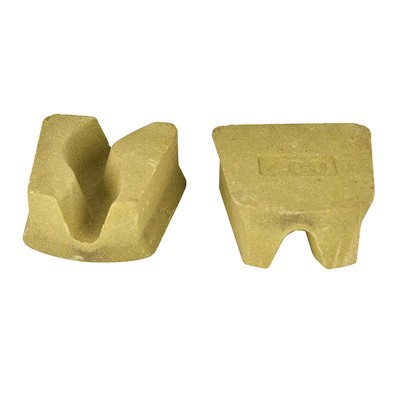
At the end of the day, when people ask about the environmental impacts of Resin Frankfurt Abrasive, the answer isn’t “good” or “bad”—it’s “intentional and manageable, with the right approach.” As a supplier, I don’t just advocate for the performance of our products; I advocate for their sustainability, because I know our clients care about reducing their own environmental footprint too. If you’re looking to switch to more sustainable abrasive solutions, or you want to work on a recycling program for your used Resin Frankfurt Abrasive, we’re here to help.
Metal Fickert Abrasive References:
- United States Environmental Protection Agency. (2022). Industrial Abrasive Waste Management: Best Practices for Manufacturers.
- International Organization for Standardization. (2021). ISO 14001: Environmental Management Systems for Abrasive Manufacturing.
- European Abrasive Manufacturers’ Association. (2023). Life Cycle Assessment of Bonded Abrasives: 2010–2023 Trends.
- Mine Safety and Health Administration. (2022). Environmental Impacts of Bauxite and Quartz Mining for Industrial Minerals.
- Green Chemistry & Engineering Journal. (2021). Phenolic Resin Binders for Abrasives: Low-VOC and Bio-Based Formulations.
Quanzhou Cheefung New Materials Co., Ltd.
As one of the most experienced resin frankfurt abrasive enterprises in China, we are able to meet the needs of the majority of our customers. Please feel free to wholesale advanced resin frankfurt abrasive made in China here from our factory. For price consultation, contact us.
Address: Jinshan Community, Licheng District, Quanzhou City, Fujian, China
E-mail: info@prostonetools.com
WebSite: https://www.prostonetools.com/
