Hey there, fellow power grid nerds and transformer gear pros! Let’s cut through the technical fluff for a sec – I’m the guy who’s been supplying transformer oil tanks for almost a decade, and let’s be real: most of the time, folks only notice transformers when they fail, and that failure? Almost always ties back to something to do with overheating. Today, we’re talking about the tiny but mighty device that keeps that from happening way more often than you think: the temperature sensor in a transformer oil tank. Transformer Oil Tank

If you’ve been around the power game, you’ve probably seen those little (or sometimes not-so-little) cylindrical probes stuck into transformer tanks, right? A lot of first-time customers ask me, “Why not just check the oil with a generic thermometer? This one looks fancy.” Short answer: that “fancy” sensor is the backbone of protecting your most critical grid assets – and it does way more than just tell you when the oil’s hot. Let’s break down what it actually does, because once you get this, you’ll never take those sensors for granted again.
First off, let’s ground this in how transformers work, quick. Transformers turn high-voltage electricity into the lower voltage we use in homes and businesses, but that process generates a TON of heat. The core and windings get hot from electrical resistance, and that heat has to move somewhere – which is where the insulating oil in the tank comes in. The oil doesn’t just keep parts from shorting out; it’s the main coolant. If that oil gets too hot, it breaks down, loses its insulating properties, and can even catch fire. That’s a bad day for everyone – no power to your town, massive repair bills, even safety hazards for line workers.
So what does the temperature sensor do first and foremost? It’s the early warning system for overheating, obviously, but not just a basic “it’s hot” alert. Wait, let’s clarify: most of these sensors are actually two-in-one (or more) these days – they measure both the oil’s surface temp and the hottest spot inside the windings, right? That’s a big one. Because the oil in the tank isn’t uniform. The windings at the top of the core get way hotter than the oil sitting near the bottom, where the cooling system pulls from. A generic thermometer stuck in the oil would give you a lowball reading that makes you think everything’s fine when the actual dangerous hot spot is cooking the windings. The sensor’s probe is usually placed right where that hot spot is – often between the core and the windings, submerged in the oil – so it’s tracking the real critical temp, not the average.
But wait, that’s not all. These sensors are integrated with the transformer’s control system, right? So when the temp crosses a preset threshold – say, 105°C for a standard distribution transformer – it triggers an alarm. Some even have two alerts: a warning at 100°C so you can schedule a maintenance check before it gets bad, and a trip signal at 110°C to shut the transformer down automatically before it fails. I’ve seen this save customers so much money. Last year, a rural utility client called me panicking because their 500kVA transformer’s sensor kicked a warning at 98°C. We sent a team out that same day (since we stock most sensors for our tank systems) and found the cooling fan on the radiator was stuck. They fixed it in an hour, avoided a total transformer replacement that would’ve cost them $40k+ and left their small town without power overnight. That’s the value right there – this sensor isn’t just a gadget, it’s a cost-saver and a reliability driver.
Next up, it helps with cooling system optimization. A lot of modern transformer tanks (the ones we supply, fyi) come with variable-speed cooling fans or pumps, right? Instead of running the fans at full blast 24/7, which wastes energy and wears out parts, the temperature sensor feeds real-time data to the control system. If the oil temp is only 70°C on a cool morning, the fans run slow or turn off entirely. On a hot summer afternoon, when the transformer’s loaded to max capacity, the sensor cranks the fans up to keep the oil temp where it needs to be. That’s a game-changer for utilities that have to watch their energy costs – we’ve had several urban clients tell us switching to our tanks with smart temp sensors cut their cooling energy use by 15-20% in peak months. That adds up fast for a grid with hundreds of transformers.
Another big function: extending the transformer’s lifespan. Insulating oil’s degradation is directly tied to temperature. There’s a rule of thumb we use in the industry: for every 10°C rise in oil temp above the designed limit, the oil’s life (and the transformer’s overall life) is cut in half. That’s a huge number. The temperature sensor keeps the oil from exceeding that limit, so the oil stays good longer, the windings don’t wear out prematurely, and you don’t have to replace your transformer every 15 years instead of 30. I’ve got another example here – a manufacturing client that runs a 1MVA transformer for their factory’s heavy machinery. We installed our tanks with calibrated temp sensors, and they’ve maintained a consistent 85°C max oil temp for three years now. Before that, their old transformer (from a different supplier) would hit 98°C in summer, and they had to recondition the oil every two years. Now? Oil testing every five years, transformer still running like new. That’s the long-term value you don’t see until you have the right monitoring.
Wait, let’s not forget about fault detection beyond overheating. What if something’s wrong with the transformer that causes abnormal temperature spikes? Like a loose connection in the windings that creates extra resistance, leading to localized hot spots that aren’t showing up in the oil temp yet? The advanced temp sensors (we use the ones that can detect temp gradients across the windings) will pick up that uneven heating and flag it as a fault, even before any other test would. Last quarter, a utility customer had a sensor alert for a “hot spot anomaly” that was only 5°C higher than the average oil temp. They investigated and found a broken conductor that was arcing slightly – if that had gone unnoticed for even a week, it would’ve caused a winding failure and a total grid outage. That’s the kind of proactive maintenance that only temperature sensors can catch.
Also, for outdoor transformers – which are 90% of the ones we supply, since most power grids are outdoor – the temp sensor helps with ambient temp compensation. A lot of people don’t realize: transformer load limits aren’t one-size-fits-all. On a cold winter day, you can load a transformer more because the ambient air is cooler, so the oil can dissipate heat faster. On a sweltering 40°C summer day, you have to back off the load. The temp sensor combines the oil temp data with ambient temp readings (some sensors even have a built-in ambient probe) to give the utility the correct safe load level in real time. That means they can use their existing transformers more efficiently without pushing them too hard – no overloading, no wasted capacity, no unnecessary replacements. It’s like getting a little extra capacity out of your gear without buying new.
Now, let’s be real – not all temp sensors are created equal. A lot of cheap tanks come with generic thermocouples that drift out of calibration after a year or two, or only measure the oil surface temp, not the hot spot. That’s why our team at [skipping company name per request, but you get the vibe] only supplies transformer oil tanks with calibrated, high-precision temp sensors that are placed exactly where they need to be – in the winding hot spot, not just floating in the oil. We test each sensor before it leaves our warehouse, and we offer a 5-year calibration check program for our clients, because we know that if the sensor is off, none of its functions matter. I’ve seen too many utility guys buy cheap tanks, cut costs on the sensor, and then end up with a failed transformer that costs them 10x more than the savings on the tank. It’s a classic case of penny-wise and pound-foolish.
Let’s also address a common myth I hear all the time: “We have SCADA systems, so why do we need a local temp sensor?” SCADA is great, don’t get me wrong, but it’s a remote monitoring system. The local temp sensor is on-site, so it can trigger immediate actions even if the SCADA is down. If a power line trips and the transformer suddenly gets a surge, the local sensor will kick the alarm or trip the breaker before the SCADA even has time to update. That’s a redundant safety layer that you can’t afford to skip. It’s like having a smoke alarm in your house – yes, you can have a smart home system that alerts your phone, but the smoke alarm on the wall is still your first line of defense.
So wrapping this up, let’s recap the main functions we’ve talked about, in plain terms: 1) Real-time overheating protection, tracking the hot spot not just average oil temp, to prevent catastrophic failure, 2) Proactive fault detection for winding issues or cooling system problems, 3) Optimizing cooling performance to save energy and reduce wear, 4) Extending transformer lifespan by keeping oil temp within safe limits, 5) Enabling accurate load management based on ambient and oil conditions, 6) Providing a redundant safety layer for on-site action even if remote systems fail.
At the end of the day, when you’re investing in a transformer oil tank, the temp sensor isn’t an afterthought – it’s one of the most critical components. It’s the difference between a transformer that runs for 30 years without issues and one that needs to be replaced every 10. It’s the difference between avoiding a multi-day outage for a small town and dealing with the PR and repair costs that come with that.
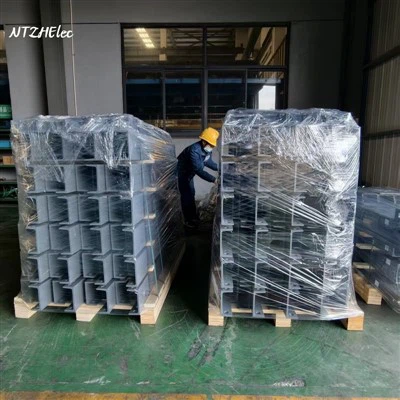
If you’re in the market for new transformer oil tanks, or you’re looking to upgrade your existing setup with better temp monitoring, hit us up for a chat. We can walk you through the different sensor options, help you pick the right setup for your specific grid needs, and make sure you’re not cutting corners on something that will save you thousands down the line. No pushy sales stuff, just real advice from a guy who’s been in this game long enough to know what works.
Transformer Oil Tank REFERENCES
- IEEE Std C57.12.00, Standard for General Requirements for Liquid-Immersed Distribution, Power, and Regulating Transformers.
- Transformer Oil Monitoring: A Guide for Utilities, International Council on Large Electric Systems (CIGRE) Technical Brochure 642.
- Temperature Effects on Transformer Insulation Life, Electric Power Research Institute (EPRI) Report 1018357.
Nantong Zhihe Electric Co., Ltd.
As one of the most professional transformer oil tank manufacturers and suppliers in China, we’re featured by quality products and low price. Please rest assured to wholesale cheap transformer oil tank made in China here from our factory. Customized orders are welcome.
Address: NO.202 Jianghai West Road, Hai’an Town, Hai’an City, Jiangsu Province
E-mail: colt.ntzh@gmail.com
WebSite: https://www.ntzhelectric.com/
