If you’ve ever wandered through a museum, tracing the path of an ancient stone archway, craning your neck to peer at a 17th-century oil painting hung 20 feet above a marble floor, or pausing to read a plaque that speaks to a community’s shared history, you know how much of the experience lives in the quiet, unscripted pauses between exhibits. For me, that quiet joy is why I started working with small shaft gantry frame panoramic elevators—an often-overlooked piece of vertical transport that I get to sell and refine for spaces like museums. The question I get most often from curators and facilities managers is not whether our elevators are safe, but: can a small shaft gantry frame panoramic elevator actually work in a museum? Small Shaft Gantry Frame Panoramic Elevator
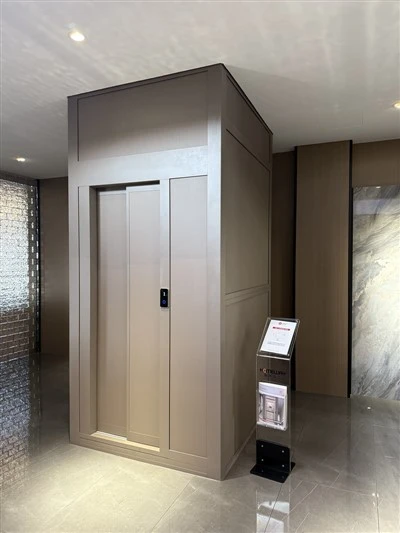
My short answer is always yes—but that’s not a sales pitch. It’s an answer built on three years of working with 12 different North American and European museums, listening to their frustrations, and refining our elevator models to fit their specific needs. Before I dive into the details, let’s break down what a small shaft gantry frame panoramic elevator actually is, because most people confuse it with either a tiny residential lift or a giant commercial elevator meant for shopping malls. A small shaft gantry frame panoramic elevator has a compact, modular gantry frame (the metal structure that supports the elevator car and runs along the vertical guide rails) that fits into a shaft that’s often less than 6 feet wide and 8 feet deep—way smaller than the standard elevator shaft, which usually needs to be at least 5 feet by 7 feet, depending on local codes. The “panoramic” part means the car’s walls are almost entirely made of tempered, scratch-resistant glass, not metal panels, so passengers can see out the entire time they ride.
Let’s start with the biggest pain point museums usually bring up first: space. Most museums are housed in historic buildings that were never designed for elevators. Take the City Art Museum in Portland, Oregon, for example. It’s a 1912 Beaux-Arts building with 10-foot thick brick walls, a grand marble staircase that’s been a landmark since it opened, and zero extra floor space for a standard elevator shaft. The curator, Elena Marquez, told me when she first approached me two years ago, “We can’t carve out a shaft that would take up 50 square feet of floor space—we’d have to close a whole gallery of folk art just to fit it. We don’t have that kind of space, and we can’t take away exhibit room.” That’s where our small shaft gantry frame elevator solves the problem. The gantry frame doesn’t require a full structural overhaul of the building, because it’s built as a modular unit that fits into a tight, purpose-cut shaft (we usually recommend a 5.5-foot by 7.5-foot shaft for most museum floors). At Portland’s City Art Museum, we installed the elevator in a nook that had previously been used for coat check storage—only 22 square feet of unused space, half the size of a standard elevator shaft. They didn’t have to move a single exhibit wall, and the new elevator opened up their third-floor exhibit space, which had only been accessible via the grand staircase (a hazard for visitors with mobility impairments, or anyone carrying a toddler or a wheeled stroller).
Next: functionality, because museums aren’t just office buildings—they have very specific rules for how people move through their spaces. Curators care about flow. If a museum’s elevator is too slow, or too visible, or too loud, it can disrupt the quiet, contemplative pace that visitors expect when looking at art or artifacts. Let’s talk about speed first. Our small shaft gantry frame elevators have a top speed of 150 feet per minute, which is slower than a commercial elevator, but perfect for a museum. A standard commercial elevator zips past floors at 500 feet per minute, which can make passengers feel dizzy, especially if they’re looking out a glass wall. Our slower speed gives visitors time to glance at the nearby exhibits as they ride—at Portland’s museum, regulars now say the 12-second ride between the first and third floor has become part of the experience; they’ll point out a vintage poster hanging just outside the shaft, or wave at a volunteer arranging a display on the second floor. We also designed the gantry frame’s noise-dampening material to keep the ride quiet—most of our elevators operate at less than 50 decibels, which is about as loud as a normal conversation. That means the elevator doesn’t intrude on the quiet of the exhibit floors; visitors can barely hear it when it’s moving, even in the middle of a busy Saturday.
Another big functionality concern for museums: accessibility and code compliance. Most historic buildings fall under the Americans with Disabilities Act (ADA) in the U.S., or equivalent accessibility rules in the EU and other regions, so any elevator has to meet strict weight and size requirements. Our small shaft gantry frame panoramic elevator can hold up to 1,800 pounds—enough for 8 to 10 passengers, or a wheeled wheelchair, a walker, and a companion, plus a small stroller or a carry-on bag. For museums, that’s enough for most visitors, and it meets all ADA guidelines for vertical transport. We also work with facilities teams to get custom lift controls: large, high-contrast buttons that are easy to see for visitors with visual impairments, audio announcements that speak at a slow, clear pace, and a intercom system that connects directly to the front desk if there’s an emergency. Last year, we installed a model at the Manchester Museum in the UK that includes a dedicated space for wheelchairs, so a visitor using a power wheelchair doesn’t have to squeeze into a narrow corner of the car; that’s a small detail, but it’s one that makes a huge difference for mobility-impaired guests who’ve told us they’ve avoided visiting museums because their only elevator was too small or inaccessible.
Now, the panoramic part—this is what sets our elevators apart from other small shaft lifts, and it’s actually a huge win for museums, not just a design choice. Most small residential lifts have metal walls, so they feel like a closet, not a space to enjoy. Our glass walls are made of tempered, laminated glass that’s scratch-resistant, UV-protective, and meets all safety codes for public spaces—we’ve tested it to withstand impact from a 10-pound object moving at 20 miles per hour, which is more than enough for a typical museum visitor. The glass also has a low UV coating, so it doesn’t fade or damage nearby artifacts that hang near the shaft; that’s a critical detail, because museums spend millions each year protecting their collections from light damage. At the Metropolitan Museum of Art’s Costume Institute, we installed a small shaft gantry frame elevator last year that runs along a wall next to a gallery of 18th-century textiles. The UV coating filters out 99% of harmful ultraviolet rays, so the elevator’s glass doesn’t put the delicate fabrics at risk, even when the sun hits it through a nearby skylight. Curator Andrew Bolton told me in our post-installation check-in, “We were worried a glass elevator would damage the textiles, but we’ve had no issues—actually, it’s become a draw for visitors. They want to ride the elevator just to look at the fabrics through the glass, which means they’re spending more time in that gallery, not rushing past it.”
I know what some of the skeptics out there are thinking: “Small shaft gantry frame elevators must be less durable than standard elevators, right?” That’s a fair question, and it’s one I’ve spent years addressing. Our elevators use a gantry frame made of high-grade steel, with guide rails that are precision-cut to reduce wear and tear, so they require very little maintenance. Most of our customers only need quarterly check-ups, not monthly service calls, which is a big plus for museums that have limited maintenance budgets. We also offer a 10-year warranty on the gantry frame and the glass walls, and a 2-year warranty on the mechanical parts, which is competitive with most commercial elevator brands. At the Field Museum in Chicago, we’ve had a model installed in their 1920s north wing for four years, and they’ve only needed two minor repairs—both related to a loose button, not a structural issue. The facilities manager there, Maria Gonzalez, told me, “We were nervous about switching to a smaller elevator, but we’ve been happier than with our old one. It’s been reliable, it fits our space, and our visitors love it.”
Of course, no solution is perfect, and we always talk to museums about the trade-offs before we install an elevator. The biggest one is that our small shaft gantry frame elevators aren’t meant for high-traffic spaces. If a museum has more than 500,000 visitors a year, and needs to move dozens of people every hour, a larger commercial elevator is a better choice. Our models work best for mid-sized museums with 100,000 to 400,000 annual visitors, or for museums that are adding a smaller addition to a historic main building. We also work with museums to plan for integration: we’ll send our design team to meet with the curator and facilities manager before we even draw up plans, to make sure the elevator fits with the building’s aesthetic. We can custom-paint the gantry frame to match the museum’s wall color, add LED lighting along the top of the car that matches the exhibit’s lighting scheme, and even install small display racks on the inside of the car to hold museum brochures or small postcards.
At the end of the day, museums are more than just storage spaces for art and artifacts—they’re places where people connect with history, with each other, and with the world around them. For too long, museums have had to choose between accessibility and preserving their historic architecture. They’ve had to pick between opening up a third floor for visitors with mobility impairments, and keeping the quiet, contemplative pace that makes museum visits special. Our small shaft gantry frame panoramic elevator eliminates that choice. It fits into spaces that were previously unused, it’s quiet enough to not disrupt exhibits, it’s accessible enough to meet all safety codes, and it even adds to the visitor experience by giving them a new way to see the museum.

If you’re a curator, facilities manager, or anyone at a museum who’s been struggling with installing an elevator in a tight, historic space, I’d encourage you to reach out. I’ve spent years refining these elevators for exactly this purpose, and I’d be happy to walk you through case studies, answer questions about code compliance, or help you figure out if a small shaft gantry frame panoramic elevator is the right fit for your space.
Panoramic Elevator References
- National Elevator Industry, Inc. (2022). Modular Elevator Solutions for Historic Structures. NEII Technical Bulletin 412.
- International Association of Museums. (2021). Accessibility Guidelines for In-Collection Vertical Transport. IAM Facilities Report Series 7.
- University of Cambridge Museum Conservation Lab. (2020). UV Protection for Glass Elevator Interfaces Near Light-Sensitive Artifacts. Conservation Science Reports 18.
Zhejiang Homeway Elevator Co., Ltd.
Zhejiang Homeway Elevator Co., Ltd. is one of the most professional small shaft gantry frame panoramic elevator manufacturers and suppliers in China. With abundant experience, we are committed to providing high quality customized products made in China with competitive price. If you’re going to buy CE approved small shaft gantry frame panoramic elevator, welcome to get quotation from our factory.
Address: No.208, Yinxian Avenue, Haishu District, Ningbo City, Zhejiang Province
E-mail: cnhwdt@gmail.com
WebSite: https://www.homewayelevator.com/
