In the textile manufacturing industry, the stenter machine plays a pivotal role in the finishing process, ensuring that fabrics are dried, stretched, and heat – set to achieve the desired quality and dimensions. Among its many components, the edge – guiding system stands out as a crucial feature that significantly enhances the efficiency and quality of the stenter operation. As a stenter machine supplier, I am well – versed in the functions and importance of this system, and I am excited to share this knowledge with you. Stenter Machine
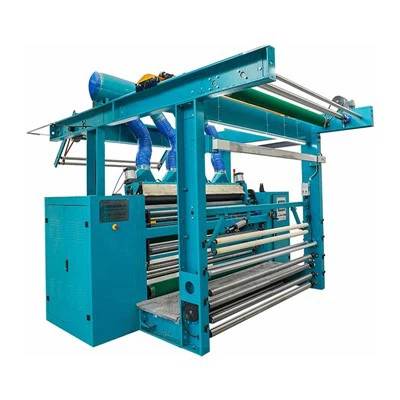
1. Basic Concept of the Edge – Guiding System
The edge – guiding system in a stenter machine is designed to precisely control the position of the fabric edges as it passes through the machine. It continuously monitors the fabric’s lateral position and makes real – time adjustments to keep the fabric centered and aligned. This is achieved through a combination of sensors, actuators, and control algorithms.
The sensors are the eyes of the system. They are typically placed at the edges of the fabric path and can detect the position of the fabric edges. There are different types of sensors used in edge – guiding systems, such as optical sensors, ultrasonic sensors, and capacitive sensors. Optical sensors work by emitting light and measuring the reflection or absorption of light from the fabric edge. Ultrasonic sensors use ultrasonic waves to detect the presence and position of the fabric, while capacitive sensors sense changes in capacitance caused by the proximity of the fabric.
Once the sensors detect any deviation of the fabric edges from the desired position, the information is sent to the control unit. The control unit, which is usually a programmable logic controller (PLC), processes the data and calculates the necessary adjustments. It then sends signals to the actuators, which are responsible for physically moving the fabric to the correct position. Actuators can be in the form of motors, cylinders, or other mechanical devices that can exert force on the fabric.
2. Ensuring Fabric Quality
One of the primary functions of the edge – guiding system is to ensure the quality of the finished fabric. When the fabric is not properly aligned during the stenter process, it can lead to a variety of quality issues. For example, if the fabric edges are not parallel, the fabric may have uneven tension across its width. This can result in a wrinkled or distorted appearance, as well as inconsistent shrinkage and stretching properties.
By keeping the fabric edges straight and centered, the edge – guiding system helps to maintain uniform tension throughout the fabric. This ensures that the fabric is evenly dried, heat – set, and stretched, resulting in a smooth, flat, and consistent finish. The fabric’s width and length are also more accurately controlled, which is essential for meeting the specific requirements of customers.
In addition, the edge – guiding system can prevent the fabric from being damaged during the process. If the fabric edges are allowed to wander too far, they may get caught in the machine’s components, such as the clips or the rollers. This can cause tearing, fraying, or other forms of damage to the fabric. The edge – guiding system reduces the risk of such incidents by keeping the fabric in the correct position at all times.
3. Improving Production Efficiency
Another important function of the edge – guiding system is to improve the production efficiency of the stenter machine. Without an edge – guiding system, operators would have to manually adjust the fabric position constantly, which is not only time – consuming but also prone to human error. The edge – guiding system automates this process, allowing the machine to run continuously and smoothly.
The real – time monitoring and adjustment capabilities of the edge – guiding system mean that the fabric can be processed at higher speeds without sacrificing quality. Since the system can quickly correct any deviations, the machine can operate at its optimal speed, increasing the overall production output. This is especially important in large – scale textile manufacturing, where even a small increase in production efficiency can lead to significant cost savings.
Moreover, the edge – guiding system reduces the need for rework. When the fabric is properly aligned during the stenter process, the likelihood of producing defective products is greatly reduced. This means that less time and resources are wasted on correcting or discarding faulty fabric, further improving the efficiency of the production line.
4. Adaptability to Different Fabrics
Textile manufacturers work with a wide variety of fabrics, each with its own unique properties and characteristics. The edge – guiding system in a stenter machine is designed to be adaptable to different types of fabrics. Whether it is a lightweight, delicate fabric or a heavy – duty, thick fabric, the system can be adjusted to provide the appropriate level of guidance.
For example, lightweight fabrics may require a more sensitive edge – guiding system, as they are more prone to being easily displaced. The sensors in the system can be calibrated to detect even the slightest movement of the fabric edges, and the actuators can apply gentle forces to keep the fabric in place. On the other hand, heavy – duty fabrics may need a more robust edge – guiding system that can handle the greater tension and weight of the fabric.
The edge – guiding system can also be adjusted based on the fabric’s color, texture, and pattern. Some fabrics may have a low contrast between the edge and the background, which can make it difficult for optical sensors to detect the edge accurately. In such cases, other types of sensors, such as ultrasonic or capacitive sensors, can be used instead. The system can also be programmed to ignore certain patterns or textures that may interfere with the edge detection process.
5. Integration with the Stenter Machine
The edge – guiding system is an integral part of the stenter machine, and it is designed to work seamlessly with other components of the machine. It is connected to the machine’s control system, which allows for centralized monitoring and control. The control system can display the status of the edge – guiding system, including the position of the fabric edges, the sensor readings, and the actuator movements.
In addition, the edge – guiding system can communicate with other parts of the stenter machine, such as the heating system, the fan system, and the clip system. For example, if the fabric is not properly aligned, the edge – guiding system can send a signal to the clip system to adjust the tension on the fabric, ensuring that it is held firmly in place. It can also communicate with the heating system to adjust the temperature and airflow based on the fabric’s position and condition.
6. Conclusion and Call to Action
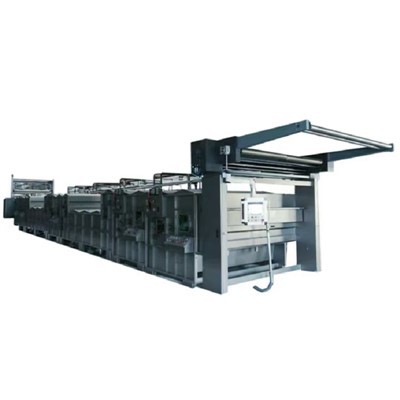
In conclusion, the edge – guiding system in a stenter machine is a vital component that offers numerous benefits to textile manufacturers. It ensures fabric quality, improves production efficiency, adapts to different fabrics, and integrates seamlessly with the stenter machine. As a stenter machine supplier, we understand the importance of this system and are committed to providing high – quality edge – guiding systems that meet the needs of our customers.
Stenter Machine If you are in the textile manufacturing industry and are looking for a reliable stenter machine with an advanced edge – guiding system, we would love to have a conversation with you. Our team of experts can provide you with detailed information about our products, answer your questions, and help you find the best solution for your specific requirements. Contact us today to start the procurement and negotiation process, and take your textile production to the next level.
References
- Chen, X., & Zhang, Y. (2018). Research on the intelligent control of the edge – guiding system in textile machinery. Journal of Textile Engineering, 25(3), 123 – 132.
- Li, W., & Wang, Z. (2019). Design and implementation of a high – precision edge – guiding system for stenter machines. Textile Science and Technology, 32(4), 201 – 210.
- Smith, J. (2020). The role of edge – guiding systems in modern textile finishing. International Journal of Textile Technology, 45(2), 89 – 98.
Jiangsu Feng Te Technology Co., Ltd.
We’re well-known as one of the leading stenter machine manufacturers in China. With a professional production team, we are able to meet the needs of the majority of our customers. Please rest assured to buy discount stenter machine for sale here from our factory.
Address: No. 4 Zhanghong Road, Siying Industrial Park, Lianyungang City, Jiangsu Province, China
E-mail: frentejenny@foxmail.com
WebSite: https://www.jsfrente.net/
