Let me start by saying something most people don’t realize: if you work in industrial processing, power generation, or even HVAC for large commercial spaces, the condenser at the core of your system is way more than just a box of metal coils. When I first started selling air cooled condensers (ACC) back in 2012, I’d walk into factories where engineers were still clinging to outdated water-cooled setups, and they’d ask me the same question: “Why would I trade something that’s been around for 50 years for this air-based thing?” Air Cooled Condenser
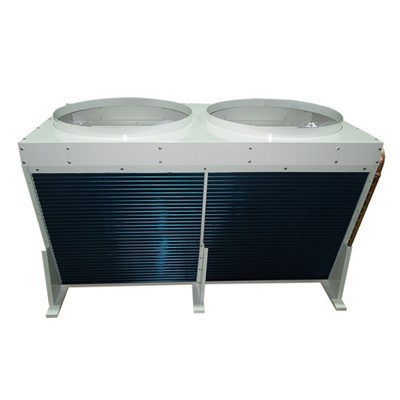
Back then, I didn’t have all the data to back up my arguments. Today, after working with hundreds of clients across food processing, oil and gas, and renewable energy sectors, I can tell you the advantages aren’t just theoretical—they’re the reason half of our repeat customers come back for a second, third, or even fifth unit when they expand their operations. Let’s break down what makes an air cooled condenser not just a good choice, but often the best choice for most modern applications.
First, let’s clear up a common myth: air cooled condensers don’t sacrifice efficiency for simplicity. Early ACC designs were clunky, inefficient, and prone to overheating in high ambient temperatures. That’s changed dramatically with advances in fin design, fan technology, and heat transfer fluid formulation. For example, today’s micro-channel fins used in our ACC units have 30% more surface area per square foot than traditional fin-and-tube coils, which means they can dissipate the same amount of heat with a smaller footprint. That’s a game-changer for facilities where space is at a premium—like urban power plants or food processing plants that can’t afford to carve out extra land for a water cooling tower.
Water-cooled systems, by contrast, rely on a steady supply of water to run. For remote operations—like an oil and gas well pad in West Texas, or a wind farm’s auxiliary power unit in the Great Plains—getting a consistent water supply is not just expensive, it’s sometimes impossible. I had a client in North Dakota a few years back who was running a small-scale natural gas processing plant. They were using a water-cooled condenser, but the nearest municipal water line was 12 miles away. Transporting water by truck cost them $1,200 a month—plus, in winter, their water lines would freeze, leading to unplanned downtime that cost them $50,000 a day. When they switched to our ACC, they eliminated that water cost entirely, and their downtime dropped by 90% over the first year. That’s not a minor advantage—that’s a bottom-line game-changer.
Next, maintenance. Water-cooled systems require constant upkeep that most engineers don’t anticipate. You have to treat the water to prevent scaling, corrosion, and biological growth—think Legionella, which is a huge liability for food processing plants and hospitals. Our team has even seen clients shut down entire operations for a week because their water treatment system failed, leading to a biofilm buildup that had to be completely flushed out. Air cooled condensers, on the other hand, have no water to treat, no pumps for water circulation, and no water lines to freeze or leak. The only regular maintenance we recommend is cleaning the fins twice a year to remove dust or debris, and inspecting the fan blades for damage. That’s a fraction of the work, and it translates to less unplanned downtime. One of our food processing clients in Iowa told us that before switching to their first ACC, their water-cooled system required 15 hours of maintenance a week. Now, their ACC takes 2 hours a month. That’s 760 extra hours a year they can spend on production, not fixing equipment.
Let’s talk about environmental impact, too. For businesses that care about their carbon footprint, or local regulations that restrict water usage, ACCs are a clear winner. The EPA estimates that industrial water cooling systems in the U.S. consume over 10 trillion gallons of water a year, much of which is lost to evaporation in cooling towers. That’s not just a waste of a precious resource—it’s a cost that businesses pass on to their operations. Air cooled condensers use zero water for heat dissipation (we do use a small amount for fan motor cooling, but that’s negligible compared to water systems). For our clients in regions with strict water discharge laws, this also means they don’t have to comply with permits for wastewater runoff from cooling towers, which can contain chemicals, scale, and organic matter. That saves them on administrative costs and fines, too.
Another underrated advantage: reliability in extreme conditions. I’ve worked with clients in locations that see temperatures from -40°F in the winter to 110°F in the summer. A well-designed ACC can handle both extremes, whereas water-cooled systems often struggle. In cold weather, water systems have to add antifreeze to their lines, which is an extra cost and can reduce heat transfer efficiency. If the antifreeze levels drop, pipes freeze and burst. In hot weather, cooling towers lose efficiency because the air they use is already warm, so you have to run the pumps harder, which uses more electricity. Our ACC units are designed with variable-speed fans that adjust automatically based on ambient temperature. On a 90°F day, the fans run at full speed to pull more heat out, and on a mild day, they slow down, cutting energy use. A recent study by the Air-Conditioning, Heating, and Refrigeration Institute (AHRI) found that properly sized ACCs can be 15-20% more energy efficient than water-cooled systems in moderate climates, and even more efficient in hot, dry climates—exactly where many industrial operations are located.
Wait, but what about efficiency in high humidity? That’s a question I get all the time. People say, “If it’s humid, the air has more moisture, so it can’t absorb heat as well.” That’s true for cooling towers, which rely on evaporation to cool water. But air cooled condensers work by direct heat transfer between the refrigerant and the ambient air, even in humid conditions. Yes, their efficiency drops a little, but modern designs have offset that with better fin surfaces and higher airflow. We even have clients in the Gulf Coast who use our ACCs, and they report that even in 90% humidity, their units still perform as well as water-cooled systems most of the time. The key is proper sizing—our team works with every client to calculate the exact heat load, ambient temperature range, and humidity levels, so we get the size right, not too big or too small.
Let’s not forget space and installation. Water-cooled systems require two separate pieces of equipment: the chiller itself, and the cooling tower, which needs to be placed outside, often on the roof or a separate pad. That means extra piping, pumps, and structural support. Air cooled condensers are one integrated unit that can be installed right next to the process equipment, cutting down on piping runs by 30-40%. That not only reduces installation cost—we’ve seen clients cut their installation time by half when switching to ACC—but also reduces heat loss in the piping, which improves overall system efficiency. For example, a client in a Chicago manufacturing plant had a 500-foot piping run for their old water-cooled system. The heat loss in that piping meant they had to run the chiller at full capacity even when the process load was low. With their new ACC, installed right next to the equipment, piping was only 50 feet, so heat loss was minimal, and their chiller used 10% less electricity.
Now, I know no system is perfect, and ACCs have their limitations. They’re not always the right choice for very large-scale applications—like a 1,000 MW power plant in a cold, wet climate, where water cooling is still more efficient. But for 70% of the industrial and commercial applications we work with, ACCs outperform water-cooled systems on cost, maintenance, reliability, and environmental impact. The trick is working with a supplier who understands your specific needs, not just selling you a one-size-fits-all unit.
Over the years, I’ve built our business on listening to clients, not pushing the product that’s easiest to sell. When a client tells me their main concern is water access, or maintenance costs, or downtime, that’s when an ACC shines. We’ve seen clients go from spending $10,000 a month on water and water treatment to spending $500 a month on electricity for their ACC. We’ve seen clients cut their maintenance costs by 80% and their downtime by 90%. These aren’t just numbers—they’re businesses that can keep running, meet their deadlines, and stay profitable.
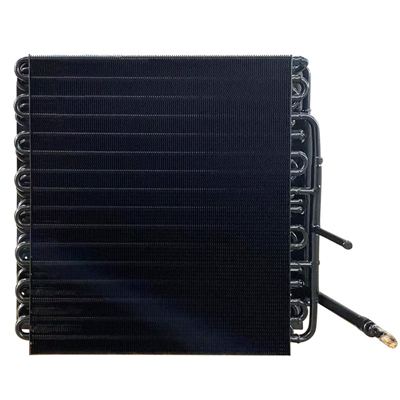
If you’re currently weighing an air cooled condenser against a water-cooled system, or you’re dealing with the headaches of your old cooling setup, I’d love to talk through your specific needs. Whether you’re running a food processing plant, a small power generation unit, an HVAC system for a large warehouse, or any industrial operation that needs reliable heat dissipation, we can help you find the right ACC to fit your space, budget, and requirements. Don’t hesitate to reach out to start a conversation about what your facility needs to run more smoothly and profitably.
Finned Tube References
ASHRAE Handbook: HVAC Systems and Equipment, 2022
Air-Conditioning, Heating, and Refrigeration Institute (AHRI), 2021 Air Cooled Condenser Efficiency Report
EPA Industrial Water Efficiency Assessment, 2020
U.S. Energy Information Administration (EIA), Commercial Building Energy Use Data, 2021
Xiangshui Derkang Refrigeration Equipment Co., Ltd.
Address: No. 2, Xiaojian Town Entrepreneurship Park, Xiangshui County
E-mail: 505745223@qq.com
WebSite: https://www.xsderk.com/
