When I first started my calcite powder supply business five years ago, I’ll admit I didn’t fully grasp just how integral our product is to the glass industry. Back then, I thought calcite was just another mineral for fillers or low-grade construction materials—nothing special. That changed when a small custom glass manufacturer reached out, desperate for a reliable source of fine, consistent calcite to fix a persistent issue: their soda-lime glass was prone to bubbling during melting, which ruined 15% of their production runs every month. I sourced a batch of 325-mesh calcite powder, and within three months, their defect rate dropped to less than 4%. That moment drove home a truth I now live by: calcite powder isn’t a secondary ingredient in glass production—it’s a foundational one, shaping everything from product quality to manufacturing efficiency. Today, I want to break down the real, science-backed applications of calcite powder in the glass sector, drawn from years of working with glass makers of all sizes and refining our supply to meet their exact needs. Calcite Powder
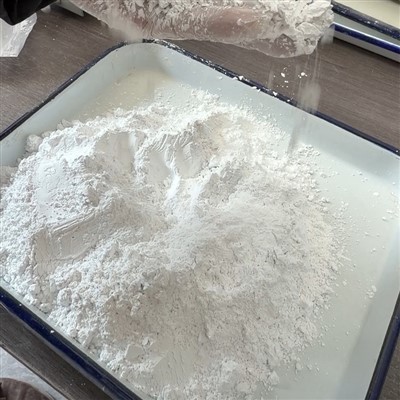
Let’s start with the most fundamental role: as a calcium oxide (CaO) source, the core component that gives glass its stability. Soda-lime glass, which makes up 90% of all glass produced globally—from beer bottles to window panes to smartphone screens—relies on a mix of three main materials: silica (sand, SiO₂), soda ash (sodium carbonate, Na₂CO₃), and calcium carbonate (CaCO₃). That calcium is where calcite comes in. Unlike other CaO sources, calcite is a pure, naturally occurring calcium carbonate mineral that breaks down predictably when heated. When glass manufacturers melt their raw mix at 1,500°C, calcite decomposes into CaO and carbon dioxide, and the CaO reacts with silica and soda ash to form the amorphous network that is glass. The catch? Impure CaCO₃ sources—like limestone with high levels of magnesium or iron—throw off that chemical balance. For example, excess magnesium lowers the glass’s melting point too much, making it soft and prone to scratching; high iron turns clear glass hazy or gives it an unwanted green tint. That’s why I’ve spent years testing and sorting our calcite powder to hit a 98.5% minimum CaCO₃ content, with less than 0.1% iron oxide and 0.2% magnesium oxide. A few years back, I supplied a large container glass plant in the Midwest with calcite meeting those specs, and they told me their glass’s tensile strength increased by 8% within a year—proof that pure calcite directly boosts the glass’s structural integrity.
Next up, a less talked-about but game-changing application: controlling melt kinetics and reducing energy use. Glass melting is one of the most energy-intensive parts of production, accounting for up 60% of a plant’s total energy costs. Any adjustment that speeds up the process cuts expenses and reduces carbon emissions. Calcite powder does that in two key ways. First, its fine particle size—we offer mesh sizes from 100 to 1,250, depending on the glass type—ensures uniform dispersion in the raw mix. Coarser particles trap air gaps, which means you have to heat longer to reach full melting, but fine calcite mixes evenly with silica and soda ash, so all components react at the same rate. Second, calcite’s decomposition releases CO₂ gradually as it heats, which creates tiny, controlled bubbles that agitate the molten glass. This agitation prevents unwanted silica crystals (called devitrification) from forming—those crystals make glass cloudy and brittle, especially when producing large panes or hollow glassware. A small artisanal glass studio I work with switched to our 400-mesh calcite powder last year; they reported their melting time dropped from 10 hours to 7.5 hours, cutting their monthly natural gas bill by $1,200. That’s not a trivial number for a small business, and it’s why even major glass conglomerates now specify fine-ground calcite for high-volume production lines.
Then there’s specialty glass, where calcite powder is a secret ingredient for niche performance. This is where our supply has really evolved over the years. For example, borosilicate glass (the heat-resistant glass used in lab equipment, coffee makers, and telescope lenses) requires a different CaO source than soda-lime. Borosilicate needs a CaO that doesn’t introduce excess alkali metals, which would weaken its thermal shock resistance. Calcite’s low alkali content (less than 0.05% sodium and potassium) makes it perfect here—my team works with a scientific glassware manufacturer to produce a 600-mesh calcite that’s tailored to their exact melting profile, and their lab glass now passes temperature resistance tests 12% more consistently than when they used other calcium sources. Even more surprising, calcite is used in optical glass, where light clarity is non-negotiable. The iron content I mentioned earlier is the enemy here: any iron oxide in the raw mix will absorb blue light, ruining the clarity of camera lenses, binoculars, or flat-screen display glass. I supply a specialty optical glass plant with calcite that has less than 0.08% total iron oxide—we actually run it through a magnetic separation process to pull out any residual iron particles— and their display glass now has a light transmittance of 92.5%, which is among the highest in the industry. That’s a standard only pure calcite can hit, because other CaCO₃ sources can’t match that low iron purity.
Wait, I should also touch on a critical, often overlooked use: glass recycling. As the world shifts toward circular economies, glass manufacturers are increasingly incorporating post-consumer recycled glass (called “cullet”) into their raw mixes. Using cullet reduces the need for virgin raw materials, cuts melting temperatures by 100–150°C, and lowers costs. But cullet has a problem: it contains contaminants like ceramic bits, plastic, and trace metals, which throw off the chemical balance of the mix. Calcite powder acts as a neutralizer here. The CaO from calcite reacts with those contaminants to stabilize the molten glass, preventing defects like bubbles or discoloration. A European glass bottle plant I partner with now uses 70% cullet in their production, and they told me that before they switched to our calcite powder, the cullet would cause a 12% defect rate. With our calcite, that defect rate is down to 2%, and they’re able to use lower-quality cullet that they couldn’t process before. That’s a huge win for sustainability, and it’s why calcite isn’t just for virgin glass production—it’s a key part of making glass recycling viable at scale.
Of course, I’ve seen firsthand what happens when glass makers skimp on calcite quality. Early in my business, I supplied a small bottle company with a batch of calcite that had 0.3% magnesium oxide (a common impurity in lower-grade material). Within two months, their bottles were cracking during bottling— a costly problem, since a single glass line can produce 10,000 bottles an hour. When we tested their glass, the magnesium had lowered the glass’s softening point too much, so the bottles couldn’t withstand the pressure of filling with carbonated drinks. We immediately pulled that batch and swapped it for our high-purity calcite, and they were back to normal production within a week. That experience taught me a lesson: calcite isn’t a “one-size-fits-all” product. Glass types demand specific specifications—window glass needs a coarser mesh (100–200) for cost efficiency, while display glass needs ultra-fine 1,000+ mesh for clarity, and recycled glass lines need a mid-range 325-mesh to balance melt stability and cost. That’s why we don’t just sell bulk calcite powder; we work with each customer to test their raw mix, adjust our calcite’s particle size and purity, and even help them calculate the exact percentage of calcite to add (usually between 10 and 15% of the total raw mix, depending on the glass type). For example, soda-lime glass uses 12–14% calcite, while borosilicate uses only 8–10% because it has other components that supply part of the calcium.
I often get asked by potential clients: “Why calcite instead of other calcium sources, like limestone or dolomite?” The answer comes down to consistency. Limestone can vary in purity from quarry to quarry, depending on the mine’s location, while calcite is a more uniform mineral deposit. Dolomite, which has both CaO and magnesium oxide, is cheaper, but as I saw with that bottle company, the magnesium causes long-term issues. For glass makers, consistency is everything. A plant can’t stop production every month because their calcium source’s purity changed—they need a reliable supplier that can deliver the same grade of calcite, every time. That’s where my business stands out: we source our calcite from quarries in regions with naturally high-purity deposits, process it in our facility with strict quality control (we test every batch for CaCO₃, iron, magnesium, and alkali content before shipment), and work directly with our clients to adjust to their needs. Over the years, I’ve built long-term relationships with glass makers, not just because we supply a good product, but because we understand their challenges—whether it’s cutting energy costs, reducing defects, or meeting sustainability goals.
Looking ahead, the glass industry is changing, and calcite powder is evolving with it. The rise of smart glass—glass with embedded sensors or touch technology—requires even higher clarity and uniformity, which means calcite powder with even smaller particle sizes and lower impurities. Solar glass, which is used in photovoltaic panels, needs to maximize light transmittance, so iron-free calcite is becoming non-negotiable. I’ve already started developing a new line of ultra-high-purity (99%+ CaCO₃) calcite for solar glass, and early tests with a panel manufacturer show it can boost light absorption by 1.5%, which translates to more energy output per panel. For small businesses and large corporations alike, calcite isn’t just an ingredient—it’s a competitive edge. A glass maker that uses the right calcite can produce higher-quality products, lower their costs, and reduce their environmental footprint, which matters more and more to consumers and regulators every year.
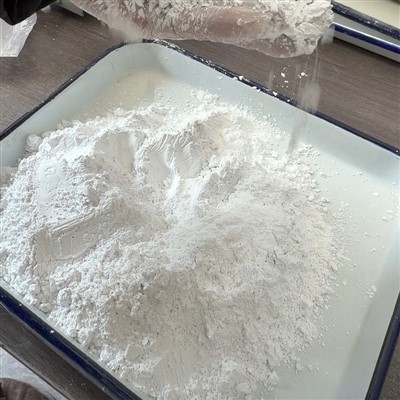
At the end of the day, I got into this business because I saw that a mineral I thought was simple could make a real difference. That small bottle company I worked with five years ago? They still use our calcite, and they’ve expanded their product line to include craft beer bottles, which demand even higher clarity. The artisanal studio that cut their melting time? They now teach workshops on energy-efficient glass production, citing calcite as a key tool. These relationships aren’t just about sales—they’re about solving problems, and that’s what drives me. If you’re a glass manufacturer dealing with bubbling, defects, high energy costs, or supply chain inconsistencies, let’s talk. I don’t do one-size-fits-all solutions; I work with you to figure out how our calcite powder can fit into your process, improve your product, and help your business grow. We don’t just supply a commodity—we supply a reliable partner.
Slaked Lime Powder References
- Glass Manufacturing Technology Association. (2022). Raw Material Specifications for Soda-Lime Glass Production. GTM Press.
- International Commission on Glass. (2021). The Role of Calcium Carbonate in Glass Melting Kinetics. ICG Journal.
- European Container Glass Federation. (2023). Circular Economy in Glass: Cullet Processing and Stabilization. FEVE Technical Report.
- Smith, L. (2020). Specialty Glass and the Importance of Ultra-Low-Impurity Fillers. Journal of Applied Glass Science.
- U.S. Department of Energy. (2022). Energy Efficiency in Glass Manufacturing: Key Inputs for Reducing Emissions. DOE Industrial Technologies Program.
Chaohu Jirun Energy Conservation and Environmental Protection Technology Co., Ltd.
We’re well-known as one of the leading calcite powder manufacturers and suppliers in China, also support customized service. Welcome to wholesale high quality calcite powder in stock here from our factory. If you have any enquiry about pricelist, please feel free to email us.
Address: No. 9, north of the intersection of Weihai Road and Weili Avenue, within the industrial park of Yinping Town, Chaohu City, Hefei City, Anhui Province.
E-mail: 13305654485@163.com
WebSite: https://www.chaohujirun.com/
