If you’ve ever spent time in the transformer testing space—whether as an electrical utility technician, a plant maintenance manager, or even a fellow tester vendor—you’ve likely stumbled over this question: Can a Transformer Tester test the DC resistance of a transformer? It’s not a trivial question, either. DC resistance testing is one of the most foundational, first-step assessments in transformer maintenance, used to spot everything from loose wire connections and damaged windings to faulty tap changers before they turn into full-blown, costly failures. For years, there’s been a quiet divide: some teams swear their general-purpose transformer testers handle DC resistance testing flawlessly, while others insist you need a dedicated DC resistance tester to get reliable, safe results. As someone who’s been supplying transformer testing equipment for over a decade, I’ve sat across from dozens of customers on both sides of that debate, and I’ve seen exactly where the confusion comes from. Let’s break this down, no jargon fluff, no sales hype—just real-world testing and the experience of supplying equipment to teams that depend on it. Transformer Tester
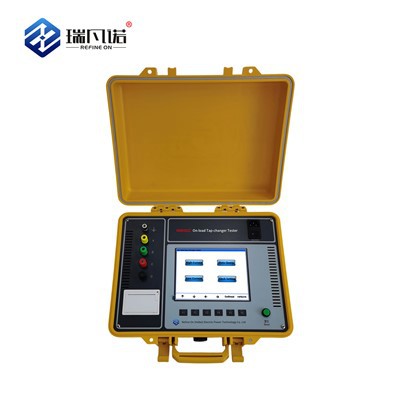
First, let’s get on the same page about what DC resistance testing actually does, because that’s where a lot of the confusion starts. DC resistance, put simply, is the measure of opposition a conductor (in this case, a transformer’s copper or aluminum windings) offers to direct current flow. For transformers, this number tells you more than almost any other initial test: a spike in resistance on one phase could mean a loose connection at the bushing, a broken strand in the winding, or a faulty tap position on the on-load tap changer (OLTC). A big discrepancy between three phases is a red flag that can save you from replacing an entire transformer mid-peak demand season—something that can cost utilities or industrial plants six figures in downtime alone. The test itself is straightforward: you inject a known low DC current (usually milliamps to amps, depending on the transformer size) into each winding, measure the voltage drop, and use Ohm’s Law (R = V/I) to calculate resistance. Simple, right? So why can’t any transformer tester do this?
Here’s the catch: not all “transformer testers” are built the same. Over the last 15 years, the market shifted from two separate tools—dedicated DC resistance testers and turns ratio testers—to all-in-one units labeled “transformer testers” that claim to do everything: measure turns ratio, phase displacement, winding resistance, even insulation resistance. When we first started rolling out these multi-function testers as a supplier, we heard from hundreds of customers who asked, “Does this replace my old DC tester?” The short answer back then was: for small, low-voltage distribution transformers (under 500 kVA), yes, it works fine. But for medium and large power transformers (above 1 MVA, like the ones for industrial factories or transmission grids), that all-in-one tester hits hard limits that dedicated DC resistance testers were built to avoid.
Let’s talk about why size matters, because that’s the biggest factor most people overlook. A 100 kVA distribution transformer has windings that measure a few ohms of DC resistance at most. A 50 MVA power transformer? Its high-voltage windings might have a DC resistance of less than 0.1 ohms, sometimes even lower. To get an accurate reading on that kind of low resistance, you need two things: enough current to generate a measurable voltage drop, and very precise voltage measurement—accurate to microvolts, not millivolts. Most all-in-one transformer testers are calibrated for general use, so their current output caps at 1 or 2 amps for winding resistance testing. For a 0.05 ohm winding, 1 amp gives you a 50 microvolt drop. That’s a tight signal, and it’s easy for noise from the tester’s internal circuits, or even the ambient electrical noise in a substation, to throw the reading off. A dedicated DC resistance tester, on the other hand, can output 10, 20, even 50 amps, depending on the unit. That same 0.05 ohm winding at 10 amps gives you a 500 microvolt drop—10 times stronger, way less prone to noise interference. We had a customer last year, a utility in the Midwest, who learned this the hard way. They used a popular all-in-one tester on a 75 MVA transformer and got inconsistent resistance readings across three phases, with discrepancies of up to 2%. They brought in their old dedicated DC tester and got readings that matched within 0.1%, spotted a loose tap changer connection that the all-in-one missed, and avoided a potential failure during summer peak load. That’s not an isolated case—we hear that story at least once a month.
Another key difference is time. Large transformer windings have what’s called inductance, which means they resist sudden changes in current. If you inject a small current from an all-in-one tester, the current stabilizes fast—so you get a reading in 10 or 15 seconds. Injecting a high current for low-resistance windings? It takes time for the current to stabilize, because the inductance of the winding creates a back EMF that slows things down. A dedicated DC resistance tester is designed with built-in timing algorithms that wait for the current to fully settle before taking a reading, so you don’t get a false low reading. That might take a minute or two per winding, but it’s worth it for accuracy. The all-in-one tester, built for speed on small transformers, cuts the time short to keep testing sessions quick, which leads to unreliable data on larger units.
Wait, but hold on—let’s not write off all “transformer testers” entirely. For the distribution transformers that make up the bulk of the units utilities test every day, the all-in-one multi-function testers work perfectly for DC resistance. We supply both: for small distribution fleets, our entry-level multi-function transformer testers include a DC resistance test function that meets ANSI and IEC standards for transformers up to 500 kVA. We’ve tested these against dedicated DC testers on hundreds of small units, and the readings are identical. The problem comes when people try to use those same units on medium and large power transformers, and on tap changers. OLTCs, for example, have multiple positions with very low resistance windings. To test each tap position accurately, you need that high current and precise measurement again—something most all-in-one testers can’t deliver.
I’ve also heard a common myth that you only need a dedicated DC resistance tester if you’re troubleshooting a problem. That’s not true. Routine testing, which should happen every 2 to 5 years depending on the transformer’s age and application, requires accurate readings too. If you’re using an underpowered tester on a new 10 MVA transformer, and your reading is 5% higher than the factory test report, you might think there’s a fault when there isn’t—or vice versa, miss a real fault because the reading is off. A friend who’s a maintenance manager at a paper mill told me last year they bought a used all-in-one tester to save money, and after their first routine test, the readings were 3% higher than the factory specs. They panicked, shut down a production line worth $100,000 a day to inspect the windings, and found nothing wrong. When they borrowed a dedicated DC tester from a local utility, the readings matched the factory. That’s a costly mistake, all because of misaligned expectations about what a transformer tester can do.
So, to circle back to the original question: Can a Transformer Tester test the DC resistance of a transformer? The answer is, it depends on what kind of transformer tester, and what kind of transformer. If you’re working with small, low-voltage distribution transformers, a modern all-in-one transformer tester will work just as well as a dedicated DC resistance tester, and save you the cost of an extra piece of equipment. But if you’re testing medium or large power transformers, tap changers, or any unit with very low DC resistance windings, a general-purpose transformer tester won’t give you the reliable, accurate readings you need to protect your equipment.
As a supplier, we’ve never pushed one over the other blindly. We spend time with every customer to map out their testing needs: how big are their transformers? What types of tests do they run routinely? What’s their budget? If a customer only tests distribution transformers, we’ll recommend the multi-function unit. If they own a fleet that includes 10+ MVA power transformers, we’ll recommend adding a dedicated DC resistance tester as part of their setup. We also offer calibration services for both types of equipment, because even the best testers need annual checks to make sure their voltage and current readings are accurate.
At the end of the day, transformer testing is about reliability. You don’t want to guess at a fault that could take a grid offline or shut down a manufacturing facility with millions in losses. The key is not to fall for marketing that says “one tester does everything”—it’s to understand the limits of the tools you use, and match them to the job. If you’re not sure whether your current transformer setup can handle accurate DC resistance testing for your units, or if you’re looking to upgrade your testing equipment without wasting money on tools that don’t fit your needs, we’re here to help. We work with utilities, industrial plants, and testing contractors of all sizes, and we can walk you through the options that make the most sense for your operation.
Lightning Arrester Tester References
IEEE Std C57.12.90, Standard Test Code for Liquid-Immersed Distribution, Power, and Regulating Transformers
IEC 60076-1, Power Transformers – Part 1: General
ANSI/IEEE Std 43, Recommended Practice for Testing Insulation Resistance of Rotating Machinery
Refine On (Hebei) Electric Power Technology Co., Ltd.
Refine On (Hebei) Electric Power Technology Co., Ltd. is one of the most reliable transformer tester manufacturers and suppliers in China, also supports customized service. Please feel free to wholesale advanced transformer tester at competitive price from our factory. Contact us for quotation.
Address: Building 13, Liandong U Valley, No.64, Jing SAN South Street, Economic Development Zone, Mancheng District, Baoding City, China
E-mail: victor@transformer-test.com
WebSite: https://www.transformer-test.com/
