Hey everyone, and welcome back to the blog – today we’re diving into a question I get at least a dozen times a week, mostly from contractors, civil engineers, and even some small business owners putting up perimeter barriers for parking lots: Are there pre-fabricated guardrail post systems? Guardrail Posts
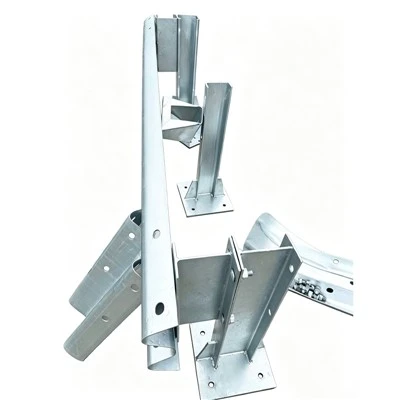
If you’ve been around guardrail posts for any length of time, you know the old way: digging a hole, mixing concrete, hoisting a post into it, leveling it, letting it cure for days before you even touch the rail. It works, but it’s messy, slow, and if you’ve ever dealt with a job site that’s on a tight timeline or has tricky ground (like rocky soil, saturated clay, or even asphalt), you know that method can turn a 2-hour job into a 3-day headache. That’s exactly why pre-fab guardrail post systems blew up over the last decade, and why our team here (I’m one of the folks you’d talk to if you reach out about posts) has worked to refine them so they’re actually reliable, not just a “faster shortcut.”
First, let’s cut through the confusion: when people ask about pre-fabricated guardrail post systems, they’re not talking about one single product. It’s a category of products designed to eliminate on-site concrete mixing, hole digging (or at least reduce it), and the guesswork that comes with traditional posts. Let’s break down the main types so you know what to actually look for, because not all pre-fab systems are created equal.
The most common one you’ll run into is driven pre-fab posts. These are steel posts, typically hot-dip galvanized to resist rust, that come straight from the factory in standard lengths (like 4ft, 6ft, 8ft, whatever works for your guardrail) and have a tapered end on one side. Instead of digging a hole, you use a hydraulic post driver (the same machine you use for fence posts, but sized for guardrail) to hammer them into the ground until they’re set to the required depth – usually around 2 to 3 feet for most road or parking lot use. I’ve seen contractors set a 6ft driven post in 10 minutes flat, no concrete, no waiting. But wait, there’s a catch: this only works if the ground isn’t solid rock. If your job site is on granite or compacted gravel, you might still need to drill a small hole, drop the post in, and fill it with concrete – but even then, that hole is way smaller than the ones you dig for traditional posts, so it’s faster.
Then there’s the anchor plate system, another super popular pre-fab option. These are posts that come with a heavy-duty steel base plate already welded to the bottom. You don’t drive them or dig a big hole – you just set the base plate into a pre-drilled foundation (like for asphalt or concrete, you core a 6-inch deep hole, drop the plate in, and fill with epoxy grout) or, for softer ground, you drive the base plate itself into the dirt so it’s flush. The biggest win here is that you can adjust the post height on-site easily – if the ground slopes, you don’t have to cut the post or mess with concrete levels; you just shim the base plate a little. I had a customer last month who was putting guardrail along a curved parking lot with a 12-foot elevation change over 500 feet – with anchor plate pre-fab posts, he had the whole lot done in a day, no cuts, no uneven rails.
Wait, but what about when you really can’t avoid concrete? There are pre-fab post sleeves too, which are another common system. They’re steel tubes that get set in concrete at the factory, not on-site. You just drop your guardrail post into the sleeve, and lock it in with a pin or a set screw. That means if you ever need to replace a post later – say, a car hits it and bends it – you don’t have to chisel out concrete or dig a hole. You just pull the old post out of the sleeve, drop a new one in, and you’re good. It’s a game-changer for places where damage is common, like parking garages or highway exit ramps.
Now, I know what some of you are thinking: “These pre-fab systems sound too good to be true – are they as strong as the traditional ones I’ve used for years?” That’s the biggest question, and honestly, it’s the one we test every single post for. Let’s get real: a good pre-fab guardrail post system has to meet the same safety standards as the concrete-set ones. For US folks, that’s AASHTO M180 specs, and for international, whatever your country’s road safety authority requires. We don’t sell anything that doesn’t pass third-party crash tests – last year, we had a set of our driven posts tested at a federal lab, and they withstood the same 2000lb vehicle impact that a concrete-set post does. The galvanized steel actually holds up better over time too, because there’s no concrete cracking around the post and letting water seep in, which causes rust from the inside out.
Of course, there are some cases where pre-fab posts aren’t the right call. If you’re working on a remote job site where a hydraulic driver or a core drill can’t fit – like a hiking trail with super narrow access – traditional posts might be the only option. Or if you need a really tall guardrail (like for a bridge over a busy river), some pre-fab systems aren’t rated for the extra height, so you’d need a custom setup. But for 90% of the job sites our customers deal with – roads, parking lots, warehouses, residential perimeter barriers – pre-fab is not just a time-saver, it’s actually a more durable choice.
Let me throw in a quick story to make this real. A few years back, we had a contractor who was working on a new retail center in the middle of a rainy spring. He’d bid the job using traditional posts, and halfway through, his crew was already behind – every hole they dug was filling with water, so they had to pump it out before they could set the post. One of our guys mentioned pre-fab driven posts, and he switched mid-project. He ended up finishing 2 days early, saved about $1,800 in labor costs, and told us later that the posts have held up through two winter storms with no leaning or rust. That’s the kind of win we love to see.
Now, if you’re looking at pre-fab guardrail posts for your own project, here are a few things to keep in mind so you don’t waste money on a system that doesn’t work for you. First, match the post type to your ground: driven posts for soft soil, anchor plate for asphalt or sloped ground, sleeve systems for easy replacement. Second, check the rating – don’t just buy the cheapest steel post you can find; make sure it’s rated for the traffic it’s going to handle. A post for a 30mph parking lot isn’t the same as one for a 60mph highway. Third, don’t skip the hardware. Pre-fab posts are only as good as the connectors that link them to the guardrail rail. We sell our posts with matching bolts and clips that are tested together, so you don’t have to hunt for parts that won’t fit.
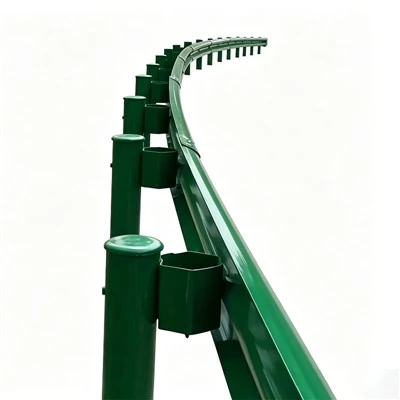
Wait, I should also mention that a lot of people confuse pre-fab guardrail posts with guardrail itself. No – the rail is the long metal beam that runs along the top, the post is the thing holding it up. Our pre-fab systems are all about the post, but we do offer compatible rails too, if you need a one-stop shop.
At the end of the day, the reason pre-fab guardrail post systems exist is simple: they solve the biggest headaches of guardrail installation. No waiting for concrete to cure, less mess on the job site, easier replacements, and just as much safety – if not more, because they’re factory-made to exact specs, not put together on-site by a tired crew at the end of the day.
If you’re curious about what system would work for your project, or want to get a quote for posts, we’re here to help. We work with small contractors and big civil engineering firms alike, so no job is too big or too small. Just reach out, tell us about your site – ground type, speed limit, how many posts you need – and we’ll walk you through the best option. No jargon, no pushy sales pitches, just straight talk about what will get the job done right, fast, and safe.
Bridge Guardrails I’ll wrap this up by saying: yeah, pre-fabricated guardrail post systems are totally a real thing, and they’re not a trend – they’re the future of guardrail installation. If you haven’t tried them yet, do yourself a favor and test a small batch on your next project. You’ll be shocked at how much time and money you save.
References
- American Association of State Highway and Transportation Officials. (2020). Standard Specification for Highway Guardrail and Bridge Rail Materials (AASHTO M180).
- Federal Highway Administration. (2022). Pre-Fabricated Bridge and Roadway Barrier Systems: Installation and Performance Guidelines.
- National Association of Home Builders. (2021). Perimeter Barrier Solutions for Residential and Commercial Properties: Efficiency and Durability Comparisons.
- International Organization for Standardization. (2019). Road Safety Barriers – Performance Requirements and Test Methods (ISO 10272:2019).
Guanxian Hongrong Traffic Facilities Co., Ltd.
As one of the most professional guardrail posts manufacturers and suppliers in China, we also support customized service. Please feel free to wholesale bulk durable guardrail posts in stock here from our factory. Welcome to contact us for quotation.
Address: South side of the road, 100 meters west of the intersection of Baiyang Road and Donghuan Road, Chongwen Subdistrict, Guan County, Liaocheng City, Shandong Province
E-mail: hongrongli568@163.com
WebSite: https://www.hongrongguardrail.com/
