As a supplier of Economical Medium Speed Wire EDM machines, I’ve spent years delving into the intricacies of these remarkable devices. One question that frequently arises among our customers is the relationship between the pulse width and cutting thickness in Economical Medium Speed Wire EDM. In this blog post, I’ll share my insights based on practical experience and industry knowledge to shed light on this crucial aspect of wire EDM cutting. Economical Medium Speed Wire EDM
Understanding Economical Medium Speed Wire EDM
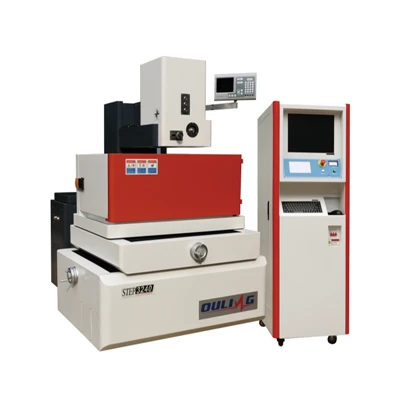
Before we explore the relationship between pulse width and cutting thickness, let’s briefly recap what Economical Medium Speed Wire EDM is. This type of machining process uses a continuously moving wire electrode to cut through electrically conductive materials with high precision. It strikes a balance between the capabilities of low – speed wire EDM (LSWEDM) and high – speed wire EDM (HSWEDM), offering good precision at a relatively more affordable cost. It’s widely used in industries such as mold making, tool manufacturing, and the production of small mechanical parts.
What is Pulse Width in Wire EDM?
Pulse width is a fundamental parameter in the wire EDM process. It refers to the duration for which the electrical pulse is applied during the cutting operation. In simple terms, it represents the time interval when the electrical current is flowing between the wire electrode and the workpiece. The pulse width is typically measured in microseconds (μs).
A shorter pulse width means that the electrical pulse is of a shorter duration. This results in less energy being delivered to the workpiece during each pulse. Conversely, a longer pulse width allows more energy to be transferred to the workpiece in each pulse. This energy is what causes the material to be eroded from the workpiece, enabling the cutting process to occur.
Factors Affecting Cutting Thickness
The cutting thickness in Economical Medium Speed Wire EDM is determined by several interrelated factors:
- Material properties: Different materials have different electrical conductivity, melting points, and thermal conductivity. For example, materials with higher electrical conductivity are generally easier to cut, as they can better conduct the electrical current required for the EDM process. High – melting – point materials, on the other hand, require more energy to be removed, which can limit the achievable cutting thickness.
- Wire electrode characteristics: The diameter, material, and tension of the wire electrode also play a role. Thicker wire electrodes can generally handle more current and thus may be able to cut thicker workpieces. However, a very thick wire may also reduce the cutting precision.
- Pulse energy and parameters: Pulse width is a key component of pulse energy. Along with other parameters such as pulse interval and peak current, they determine the total energy delivered to the workpiece per unit time. More energy allows for deeper and faster cutting, thus influencing the maximum cutting thickness.
The Relationship between Pulse Width and Cutting Thickness
In general, there is a positive correlation between pulse width and cutting thickness in Economical Medium Speed Wire EDM. Here’s a detailed breakdown of how they interact:
When Cutting Thin Workpieces
For thin workpieces (usually less than 20mm thick), a relatively short pulse width can be used. This is because thin workpieces require less energy to be removed. Using a short pulse width has several advantages in this case:
- High precision: With less energy being delivered in each pulse, there is less thermal stress and heat – affected zone on the workpiece. This results in better surface finish and higher dimensional accuracy.
- Reduced wire breakage: A short pulse width means less wear on the wire electrode, reducing the likelihood of wire breakage during the cutting process. This is especially important when cutting complex shapes or using small – diameter wire electrodes.
For example, when cutting a 10mm thick brass plate, a pulse width in the range of 10 – 20 μs may be sufficient to achieve a smooth and accurate cut.
When Cutting Thick Workpieces
As the cutting thickness increases (say, above 50mm), a longer pulse width becomes necessary. The reason is that thicker workpieces require more energy to be removed from a greater volume of material.
- Increased material removal rate: A longer pulse width increases the energy delivered to the workpiece per pulse, which leads to a higher material – removal rate. This allows the wire to cut through the thick material more quickly.
- Improved cutting stability: With sufficient energy from the longer pulse width, the cutting process becomes more stable. There is less risk of the wire stalling or getting stuck in the thick material.
For instance, when cutting a 100mm thick steel workpiece, a pulse width of 80 – 120 μs may be required to maintain a reasonable cutting speed and quality.
However, it’s important to note that increasing the pulse width is not without limitations. If the pulse width is too long, it can lead to several problems:
- Poor surface finish: Excessive energy can cause uneven erosion of the workpiece, resulting in a rough surface finish.
- Increased wire wear and breakage: The high energy from the long – pulse width can cause more wear on the wire electrode, increasing the probability of wire breakage. This can disrupt the cutting process and reduce productivity.
Optimizing Pulse Width for Different Cutting Thicknesses
To achieve the best cutting results, manufacturers need to optimize the pulse width according to the specific cutting thickness. Here are some general guidelines:
- Initial parameter setting: Based on the material type and expected cutting thickness, refer to the machine’s operation manual or past experience to set an initial pulse – width value.
- Testing and adjustment: Conduct test cuts on sample workpieces. Monitor the cutting speed, surface finish, and wire – wear condition. Make minor adjustments to the pulse width based on the test results until the optimal parameters are found.
- Continuous monitoring: During actual production, continuously monitor the cutting process. If any changes in the material properties or cutting quality are detected, adjust the pulse width accordingly.
Implications for Customers
For those in the market for Economical Medium Speed Wire EDM machines, understanding the relationship between pulse width and cutting thickness is crucial. It allows them to:
- Select the right machine: Customers can choose a machine that offers a wide range of adjustable pulse – width settings, which is essential for handling different cutting thicknesses.
- Optimize production efficiency: By correctly setting the pulse width, they can maximize the material – removal rate while maintaining the desired cutting quality. This leads to shorter production cycles and lower costs.
- Improve product quality: Proper control of the pulse width helps to achieve better surface finish and dimensional accuracy, resulting in higher – quality products.
Conclusion
In conclusion, the relationship between pulse width and cutting thickness in Economical Medium Speed Wire EDM is a complex but crucial aspect of the machining process. A well – understood and properly adjusted pulse width can significantly impact the cutting speed, surface finish, and overall productivity. As a supplier, I’m committed to providing our customers with the knowledge and support they need to make the most of our Economical Medium Speed Wire EDM machines.
Upgraded High Speed Wire EDM If you’re interested in learning more about our products or have any questions regarding the relationship between pulse width and cutting thickness, I encourage you to reach out to us for a consultation. We’re here to help you optimize your wire EDM processes and achieve the best possible results. Let’s start a discussion about how our Economical Medium Speed Wire EDM machines can meet your specific needs.
References
- Masuzawa, T. (2000). "Ultrafine machining of metals by the EDM process". Annals of the CIRP, 49(2), 473 – 488.
- He, N., & Rajurkar, K. P. (2001). "Micro – electrical discharge machining". International Journal of Machine Tools and Manufacture, 41(15), 2465 – 2497.
- Singh, A., & Khamba, K. S. (2009). "Edm – manual". NIS Academy of Engineering Sciences.
Taizhou Ouling CNC Equipment Co., Ltd.
As one of the most professional economical medium speed wire EDM manufacturers and suppliers in China, we’re featured by quality products and good price. Please rest assured to buy advanced economical medium speed wire EDM made in China here from our factory. Welcome to contact us for quotation.
Address: No. 9 jingang Road, Yangzhou City Jiangsu Province, China
E-mail: 574751243@qq.com
WebSite: https://www.oulingedm.com/
