As a supplier of Signal Distribution Amplifiers, I’ve witnessed firsthand the critical role these devices play in various industries, from telecommunications to broadcasting and beyond. One of the most significant factors that can impact the performance of a Signal Distribution Amplifier (SDA) is temperature. In this blog post, I’ll delve into how temperature affects the performance of SDAs, exploring the underlying scientific principles and real – world implications. Signal Distribution Amplifier
The Basics of Signal Distribution Amplifiers
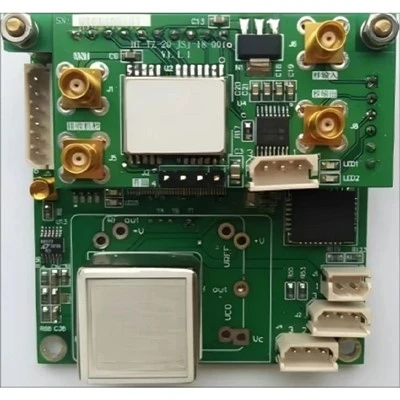
Before we dive into the effects of temperature, let’s briefly review what a Signal Distribution Amplifier does. An SDA is designed to take an input signal and distribute it to multiple outputs while maintaining the signal’s quality and integrity. This is crucial in applications where a single signal needs to be shared across multiple systems or devices, such as in a cable TV network or a corporate AV setup.
The amplification process in an SDA involves boosting the signal strength to compensate for any losses that may occur during transmission. It uses active components, such as transistors and operational amplifiers, to achieve this. These components are highly sensitive to changes in temperature, which can have a profound impact on the amplifier’s performance.
Temperature and Electrical Components
Resistance Changes
One of the most fundamental effects of temperature on electrical components is the change in resistance. Most conductors, including the resistors used in SDAs, follow the principle that their resistance increases with an increase in temperature. This is described by the temperature coefficient of resistance.
For resistors in an SDA, a change in resistance can affect the gain and impedance matching of the amplifier. The gain of an amplifier is determined by the ratio of the resistances in its circuitry. If the resistance values change due to temperature variations, the gain will also change. This can lead to a signal that is either too weak or too strong at the output, resulting in poor signal quality.
Impedance matching is another critical aspect of amplifier performance. SDAs are designed to have a specific input and output impedance to ensure maximum power transfer and minimal signal reflection. A change in resistance can disrupt this impedance matching, causing signal reflections and a decrease in the overall efficiency of the amplifier.
Transistor Performance
Transistors are the heart of any amplifier circuit. They are used to amplify the input signal by controlling the flow of current. Temperature can have a significant impact on transistor performance in several ways.
First, the carrier mobility in a transistor decreases with increasing temperature. Carrier mobility refers to how easily electrons or holes can move through the semiconductor material. A decrease in carrier mobility means that the transistor is less efficient at amplifying the signal, which can lead to a reduction in gain.
Second, the threshold voltage of a transistor can change with temperature. The threshold voltage is the minimum voltage required to turn on the transistor. A change in this voltage can cause the transistor to operate in a different region of its characteristic curve, affecting the linearity of the amplifier. Non – linear amplification can introduce distortion into the signal, which is highly undesirable in most applications.
Thermal Noise
In addition to affecting the electrical characteristics of components, temperature also generates thermal noise. Thermal noise is a form of random electrical noise that is present in all electronic devices. It is caused by the random motion of electrons in a conductor, which increases with temperature.
In an SDA, thermal noise can superimpose on the input signal, reducing the signal – to – noise ratio (SNR). A lower SNR means that the signal is more difficult to distinguish from the noise, leading to a degradation in the overall quality of the transmitted signal. This is particularly problematic in applications where the input signal is already weak, such as in long – distance telecommunications.
Real – World Performance Degradation
The effects of temperature on an SDA can lead to several real – world performance issues.
Signal Integrity
As mentioned earlier, changes in gain and impedance matching due to temperature can result in a change in the amplitude and phase of the output signal. This can cause distortion, attenuation, or even complete loss of the signal in some cases. In a video distribution system, for example, temperature – induced signal degradation can manifest as blurry images, color shifts, or pixelation.
System Reliability
Temperature variations can also impact the long – term reliability of an SDA. Components that are constantly exposed to high temperatures are more likely to experience thermal stress, which can lead to physical damage such as cracking or delamination. Over time, this can cause the amplifier to fail prematurely, resulting in costly downtime and repairs.
Compatibility
In complex systems where multiple SDAs are interconnected, temperature – induced performance variations can also lead to compatibility issues. If one amplifier in a chain has a different gain or impedance due to temperature, it can disrupt the overall balance of the system and cause signal reflections or interference.
Mitigating the Effects of Temperature
As a supplier, we understand the importance of providing SDAs that can perform reliably in a wide range of temperature conditions. There are several strategies that we employ to mitigate the effects of temperature.
Thermal Design
One of the most effective ways to manage temperature is through proper thermal design. This includes using heat sinks, fans, and other cooling mechanisms to dissipate heat from the amplifier’s components. Heat sinks are passive devices that increase the surface area of a component, allowing it to radiate heat more efficiently. Fans can be used to increase the airflow over the heat sinks, further enhancing the cooling effect.
Component Selection
We also carefully select components that are less sensitive to temperature variations. For example, some resistors and transistors are specifically designed to have a low temperature coefficient of resistance and a stable threshold voltage over a wide temperature range. By using these components in our SDAs, we can reduce the impact of temperature on the amplifier’s performance.
Temperature Compensation Circuits
In some cases, we incorporate temperature compensation circuits into our SDAs. These circuits are designed to sense the temperature of the amplifier and adjust the electrical characteristics of the components accordingly. For example, a temperature compensation circuit can adjust the gain of the amplifier to maintain a constant output level as the temperature changes.
Conclusion
Temperature has a profound impact on the performance of Signal Distribution Amplifiers. It can affect the electrical characteristics of components, introduce thermal noise, and lead to real – world performance issues such as signal degradation and system reliability problems. However, with proper thermal design, careful component selection, and the use of temperature compensation circuits, we can minimize these effects and provide high – quality SDAs that can perform reliably in a wide range of temperature conditions.
Time and Frequency Synchronization If you are in the market for a Signal Distribution Amplifier and want a reliable solution that can withstand temperature variations, we invite you to contact us. Our team of experts is ready to discuss your specific requirements and provide you with the best possible product for your needs. Whether you are involved in telecommunications, broadcasting, or any other industry that relies on signal distribution, we have the expertise and experience to deliver a solution that meets your expectations.
References
- Horowitz, P., & Hill, W. (1989). The Art of Electronics. Cambridge University Press.
- Sedra, A. S., & Smith, K. C. (2015). Microelectronic Circuits. Oxford University Press.
- Van Valkenburg, M. E. (1993). Network Analysis. Prentice Hall.
China Go-Sat Microwave Co., Ltd.
China Go-Sat Microwave Co., Ltd. is one of the most professional signal distribution amplifier manufacturers and suppliers in China. With abundant experience, we warmly welcome you to buy advanced signal distribution amplifier made in China here and get quotation from our factory. All customized products are with high quality and competitive price.
Address: No. 3908 ShiBo Avenue, Baqiao District, Xi’an, China
E-mail: sales@go-satcom.com
WebSite: https://www.go-satcom.com/
